
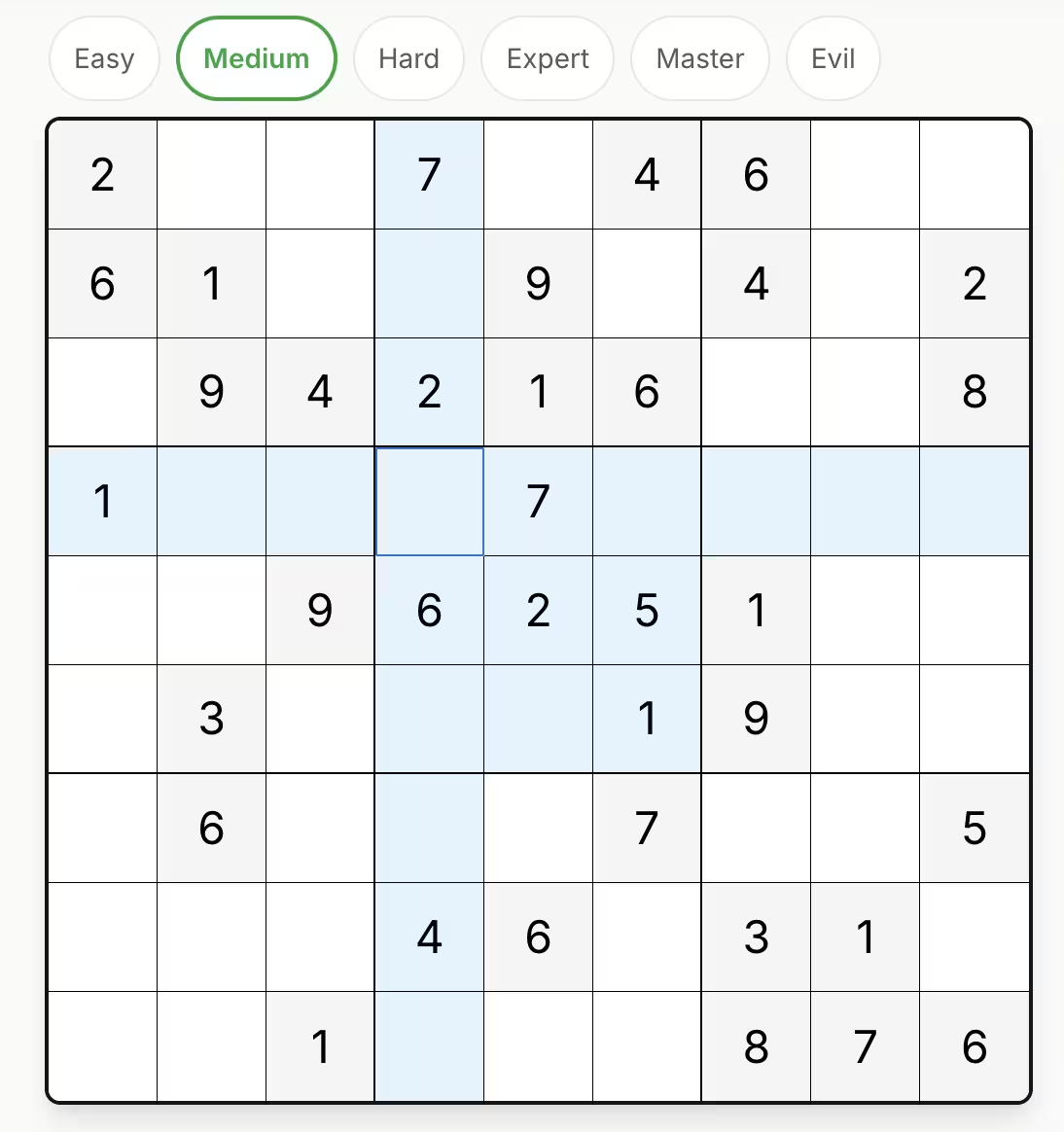
Easy Sudoku gives you 35-40 numbers to start with out of 81 total spaces. That's nearly half the puzzle already solved, making it perfect for learning the basic rules and building confidence.
Most beginners solve their first easy Sudoku in 20-45 minutes. After a week of practice, that drops to 10-20 minutes. No advanced techniques needed—just systematic thinking and patience.
Ready to learn? This isn't rocket science. Just logical thinking applied step by step until every square has exactly one right answer.
Basic Rules That Actually Matter
Fill every row with numbers 1-9. No repeats allowed. Fill every column with numbers 1-9. No repeats allowed. Fill every 3x3 box with numbers 1-9. No repeats allowed.
That's it. Three rules. Everything else is just different ways to figure out which number goes where.
Your First Solving Session
Budget 30-60 minutes for your first puzzle. Don't feel bad if it takes longer—everyone starts somewhere.
Pick a number and scan the entire grid looking for where it can go. Start with numbers that appear most often since they have fewer empty spots.
Two Techniques That Solve 90% of Easy Puzzles
Scanning Method
Pick number 1. Find all the 1s already on the grid. Each existing 1 blocks other 1s from appearing in its row, column, and 3x3 box.
Keep scanning until you find a spot where only one empty cell remains for that number. Fill it in. Repeat for numbers 2-9.
Elimination Method
Pick an empty cell. List which numbers could go there by checking what's already in that row, column, and 3x3 box.
If only one number works, that's your answer. If multiple numbers work, move on and come back later when you have more information.
Same thing works for rows and columns. Sometimes a number has only one legal position even though that cell could hold multiple numbers.
This technique catches a lot of numbers that elimination misses. Different angle, same logical result.
Common Beginner Mistakes (And How to Avoid Them)
Guessing Instead of Reasoning
When you're stuck, the temptation is to try a number and see if it works. Bad habit to develop.
Force yourself to find logical reasons for every number you place. Even if it takes longer initially, you'll build better solving skills.
Easy Sudoku Online puzzles always have logical solutions using basic techniques. If you're guessing, you're missing something obvious.
Working Too Fast
Speed comes naturally after you've internalized the patterns. Rushing leads to careless mistakes that waste more time than going slow initially.
Common Mistakes Beginners Make
Guessing when stuck instead of using logic. Every easy Sudoku puzzle is solvable without guessing. If you're stuck, you missed a logical move somewhere.
Rushing to fill in numbers without double-checking. Take time to verify your answer before writing it down. Erasing mistakes gets old fast.
Only using one technique. Scanning works great sometimes, elimination works better other times. Switch between methods when one stops working.
When You're Ready for Medium
Consistently solving easy puzzles in under 15 minutes without errors means you're ready for medium difficulty. Don't rush it—solid fundamentals matter more than speed.
Frequently Asked Questions
How long does it take to get good at easy Sudoku?
Most people solve their first puzzle within a week of trying. Getting to 15-minute solve times consistently takes 2-3 weeks of regular practice. Everyone's different though.
Can kids learn Sudoku easily?
Yes, kids 8 and up usually pick it up quickly. The logical thinking actually helps with math skills and pattern recognition. Start them with 4x4 grids if 9x9 seems overwhelming.
What's the real difference between easy and medium difficulty?
Easy gives you 35-40 starting numbers, medium only gives you 28-32. That difference matters more than you'd think. Medium requires techniques like naked pairs that easy puzzles don't need.
Should I guess if I get completely stuck?
Never. Every properly made easy puzzle is solvable through pure logic. If you're stuck, you missed something—usually an obvious placement you overlooked during scanning.
Paper puzzles or digital—which is better for learning?
Both work fine. Digital lets you make mistakes without messy erasing and offers hints when you're stuck. Paper forces you to develop better memory and note-taking skills.
How do I know when I'm ready for harder puzzles?
When you consistently solve easy puzzles in under 15 minutes without making errors. You should feel comfortable with scanning and elimination before moving up.
What if Sudoku seems impossible at first?
Everyone struggles initially. Try starting with smaller 4x4 or 6x6 grids to learn the basic logic. The 9x9 grids will make sense once you get the pattern.
Does easy Sudoku actually help your brain?
Yes. Regular practice improves pattern recognition, logical thinking, and concentration. You don't need to solve expert-level puzzles to get cognitive benefits.
How often should I practice to improve?
3-4 puzzles per week works better than marathon sessions. Consistency matters more than volume when you're learning fundamentals.
What's the most common mistake beginners make?
Filling in numbers too quickly without double-checking the rules. Take time to verify each placement—it prevents frustrating mistakes later.
Ready for More Challenge?
When easy puzzles feel routine, try medium difficulty or explore Killer Sudoku for a math twist.
Check the leaderboard to see how your times compare, or read more solving strategies to improve your technique.